Heritage
Makhana & India's Food Wisdom
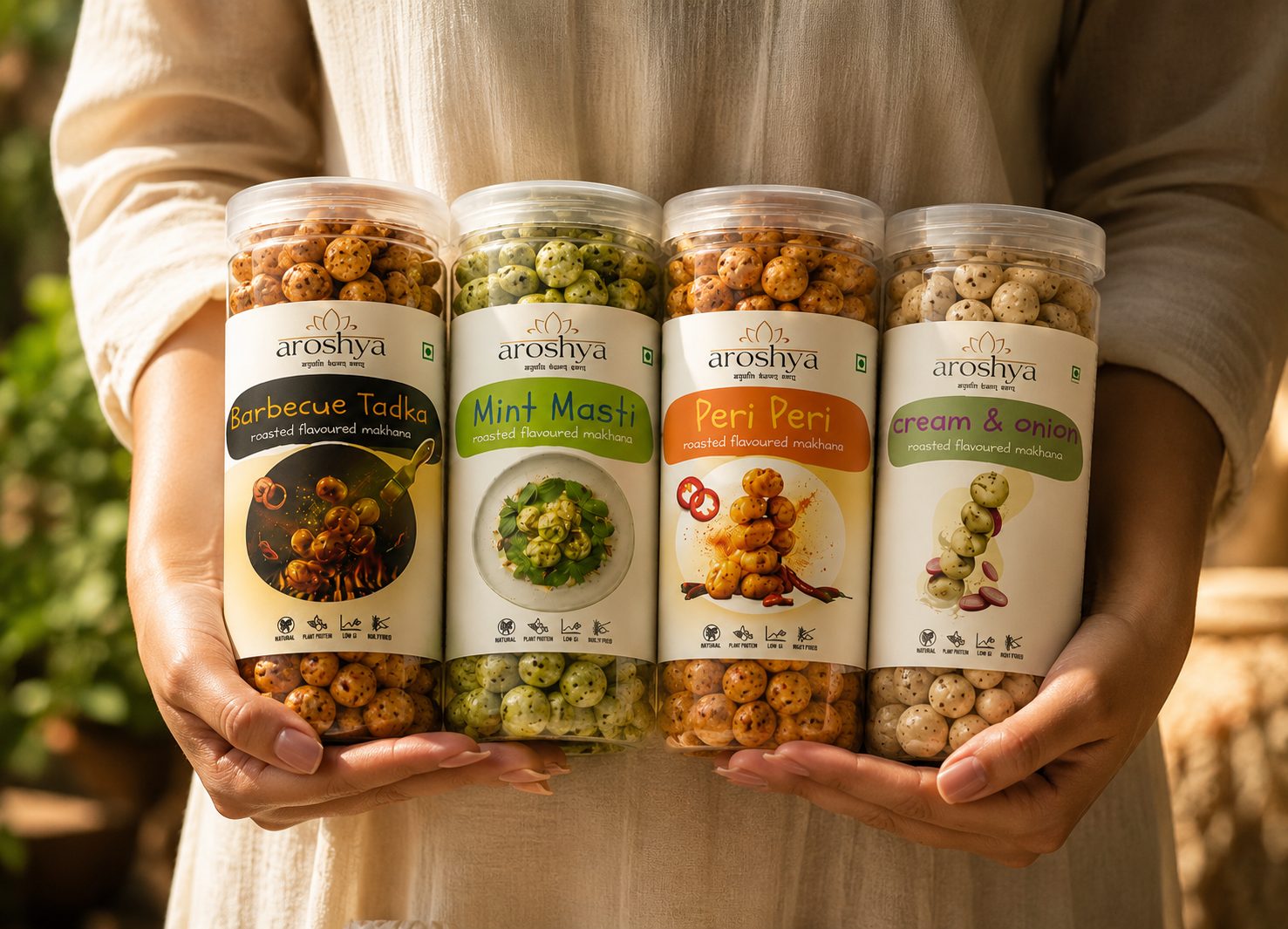
Long before the word "superfood" existed, Indian kitchens already knew the value of makhana. Harvested from the seeds of the prickly water lily, the fox nut has held a quiet, steady place in our food culture for generations.
An ancient everyday food
Makhana has featured in fasting (vrat) thalis, in comforting bowls of kheer, in temple offerings and in the everyday cooking of the Mithila region of Bihar. It was valued precisely because it is light, easy to digest and nourishing — a food that fits gentle, mindful eating.
What modern nutrition now agrees on
Today, nutritional science echoes what those kitchens understood intuitively: makhana is naturally low in fat, a source of plant protein and fibre, and has a low glycaemic index. In other words, tradition and evidence point in the same direction.
Rediscovering what's ours
Aroshya was built on a simple conviction — that India's own indigenous ingredients deserve to be celebrated with pride and presented for modern life. Sometimes progress isn't about discovering something new; it's about rediscovering what has always been ours, and giving it the place it deserves on today's shelf.
This article is for general information and reflects published nutritional research. It is not medical advice and is not intended to diagnose, treat or cure any condition. For personalised guidance, please consult a registered dietitian or doctor.
← Back to the Journal