
Nutrition
Is Makhana the Best Plant-Protein Snack?
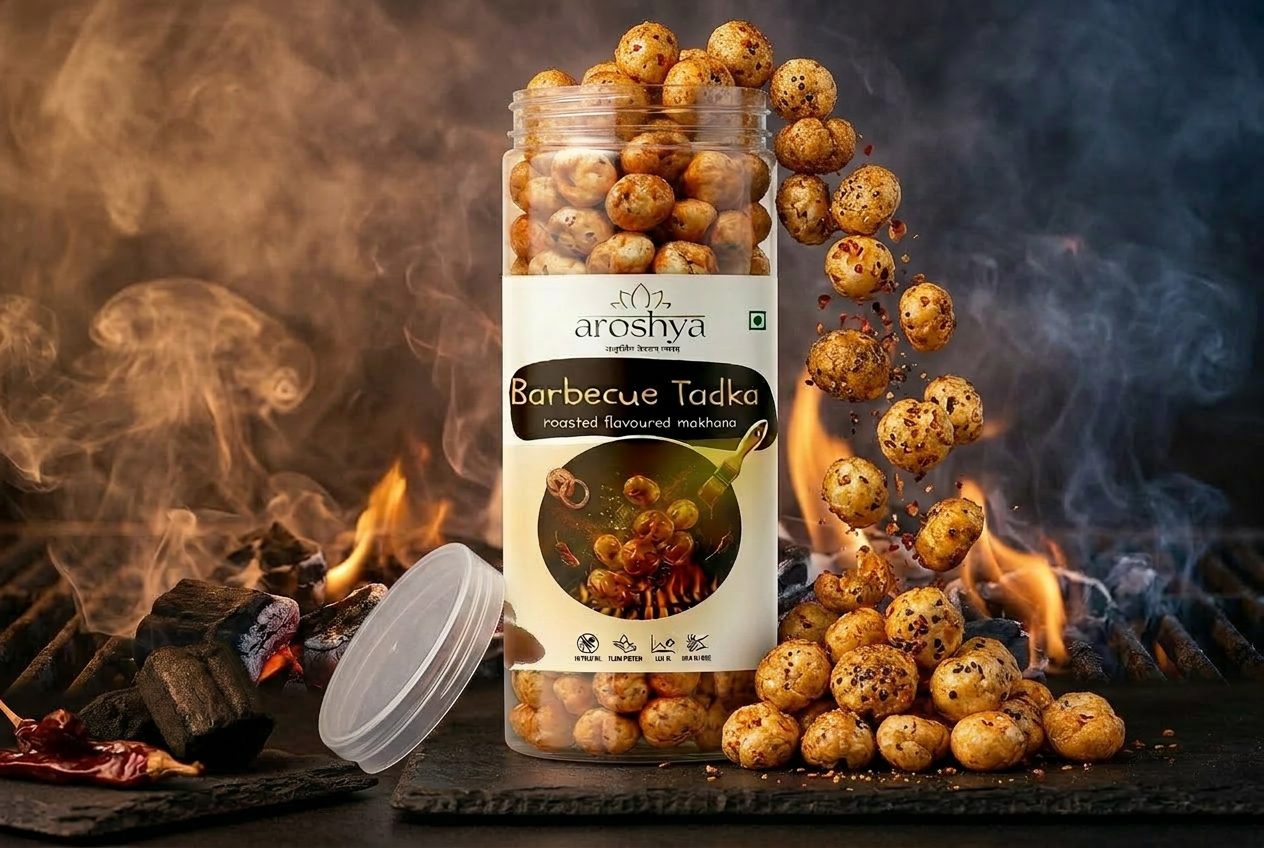
Makhana — the humble fox nut — has quietly become one of India's favourite better-for-you snacks. But how does it really stack up against the usual protein-snack suspects like almonds, peanuts and pumpkin seeds? The honest answer is nuanced, and it comes down to what you actually want from a snack.
The numbers
Per 100 g, makhana offers roughly 9.7 g of protein, is very low in saturated fat (around 0.1 g), and carries a low glycaemic index of about 55. It's also a source of fibre and minerals such as magnesium, calcium and phosphorus. Crucially, Aroshya's makhana is roasted, not deep-fried — so you get the crunch without the heaviness.
How it compares
On raw protein alone, nuts and seeds win: almonds carry around 21 g, peanuts around 25 g, and pumpkin seeds close to 30 g per 100 g. But those numbers come bundled with far more fat and calories per handful. Makhana's superpower is its lightness — a large, satisfying volume for relatively few calories, very little fat, and a low GI that supports steady energy rather than a spike-and-crash.
- Almonds & peanuts: higher protein, but energy-dense and higher in fat.
- Pumpkin seeds: excellent protein, but small portions add up quickly in calories.
- Makhana: moderate protein, very low fat, low GI, high volume — an easy everyday choice.
The verdict
Makhana isn't the single highest-protein snack on the shelf — and it doesn't need to be. As a light, low-fat, low-GI source of plant protein and fibre that you can enjoy by the bowlful, it's one of the smartest everyday snacks around. If you're after a snack you can reach for daily without the guilt, makhana is hard to beat.
This article is for general information and reflects published nutritional research. It is not medical advice and is not intended to diagnose, treat or cure any condition. For personalised guidance, please consult a registered dietitian or doctor.
← Back to the Journal