
Sourcing
Inside Bihar's Lotus Ponds
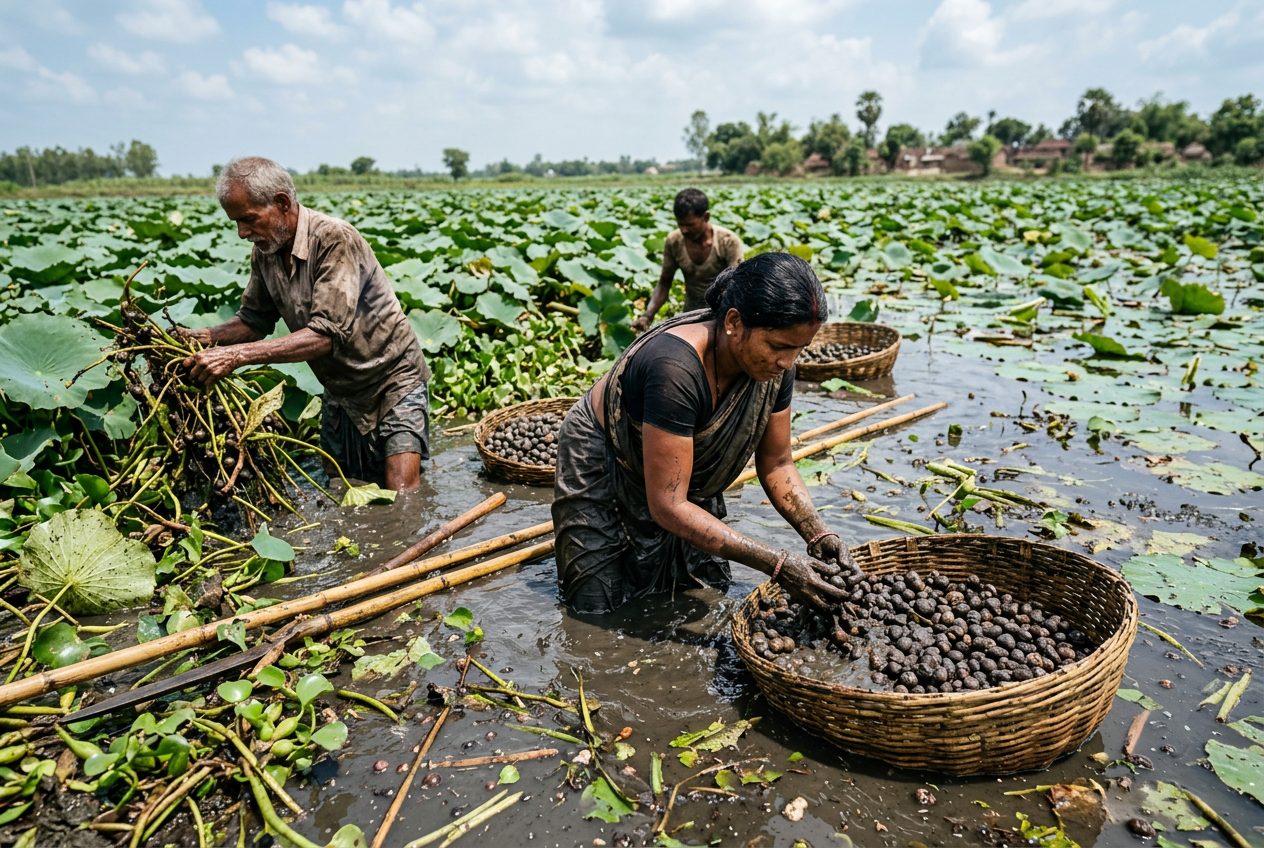
Almost every fox nut you've ever eaten began its life in the still, shallow ponds of Bihar. The Mithila region — particularly the Darbhanga and Madhubani districts — accounts for the overwhelming majority of the world's makhana. This is the natural home of the crop, and of the skilled communities who cultivate it.
A craft, not just a harvest
Makhana comes from the seeds of the prickly water lily (Euryale ferox), which grow underwater in wetlands and ponds. Harvesting is done largely by hand — divers gather the seeds from the pond bed in demanding, highly skilled work that has been passed down through generations.
From seed to pop
Harvested seeds are sun-dried, then heated in a dry pan until they pop — the shell cracks away to reveal the light, white nut inside. The larger and puffier the pop, the higher the grade; Aroshya uses premium 5+ Suta makhana, among the largest and most satisfying.
Why direct sourcing matters
Working directly with farming families means fairer prices, better traceability and a stronger relationship with the people at the heart of the crop. Our roadmap includes a women-led preparation and packaging unit — because celebrating an indigenous ingredient should also mean uplifting the communities who make it possible.
This article is for general information and reflects published nutritional research. It is not medical advice and is not intended to diagnose, treat or cure any condition. For personalised guidance, please consult a registered dietitian or doctor.
← Back to the Journal